You have one day and one night in M'hamid. This is what we do with it.
We start in the morning at the old kasbah, walk through the palm grove, eat lunch where the oasis ends, and go into the sand in the afternoon. You sleep at Douaib, in a camp we put up ourselves. The next morning we take it down, leave no trace, and walk back.
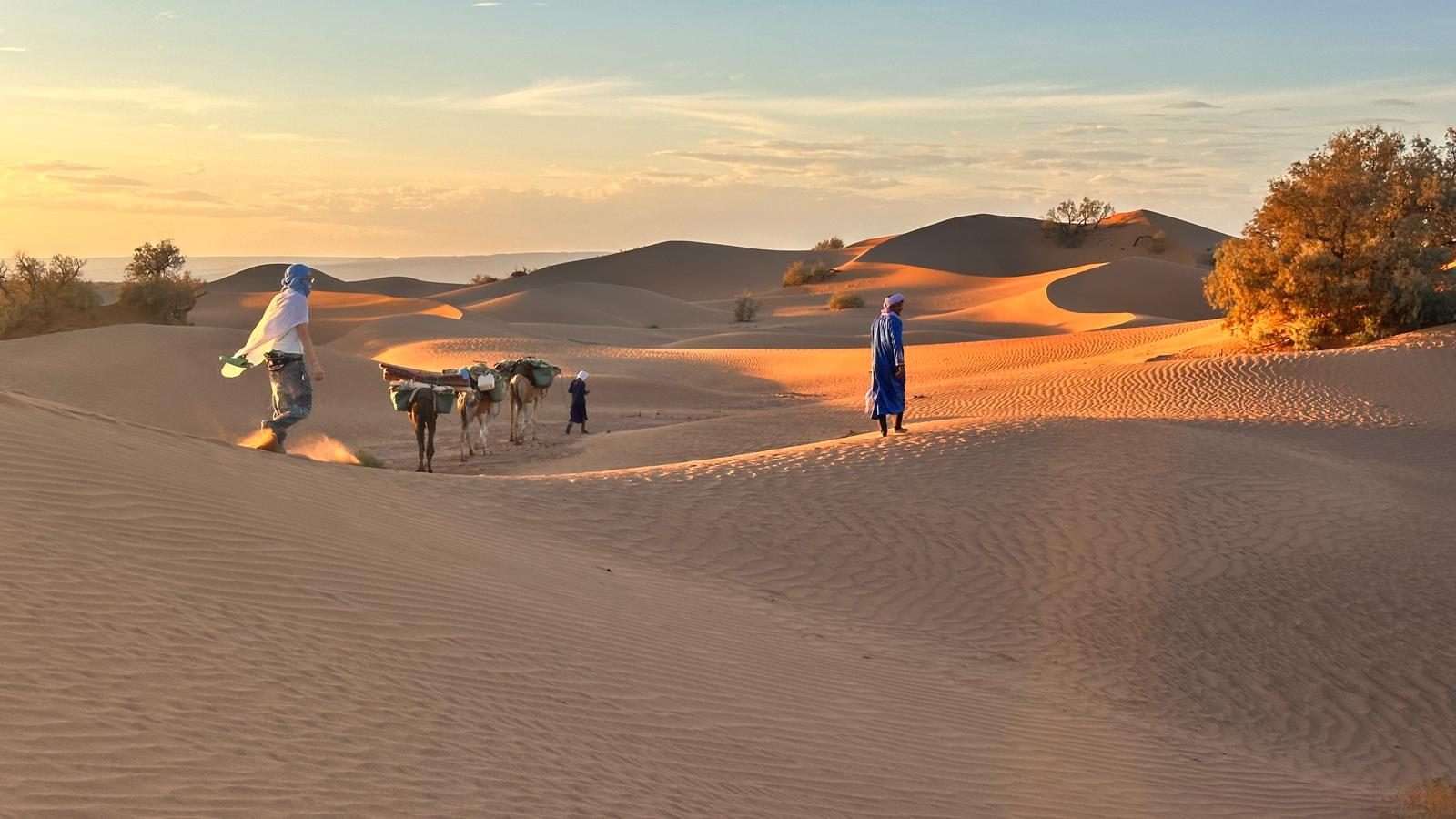
No car, no transfer. Most desert trips drive you forty minutes into the dunes and drop you there. We walk out of the village, and you feel the green stop and the sand begin.
Where
M'hamid El Ghizlane
How long
2 days, 1 night
Group
2 to 15 people
Walking
Easy
Guide & cook
Madou Bouhjar
Season
October to April
The route
Out of the village and back again
M'hamid El GhizlaneTea at the base. The old kasbah. The road ends here.
The palm groveThe last green. Lunch where the oasis stops.
DouaibThe camp. The fire, the bread, the stars.
M'hamid El GhizlaneBack on foot in the cool of the morning.
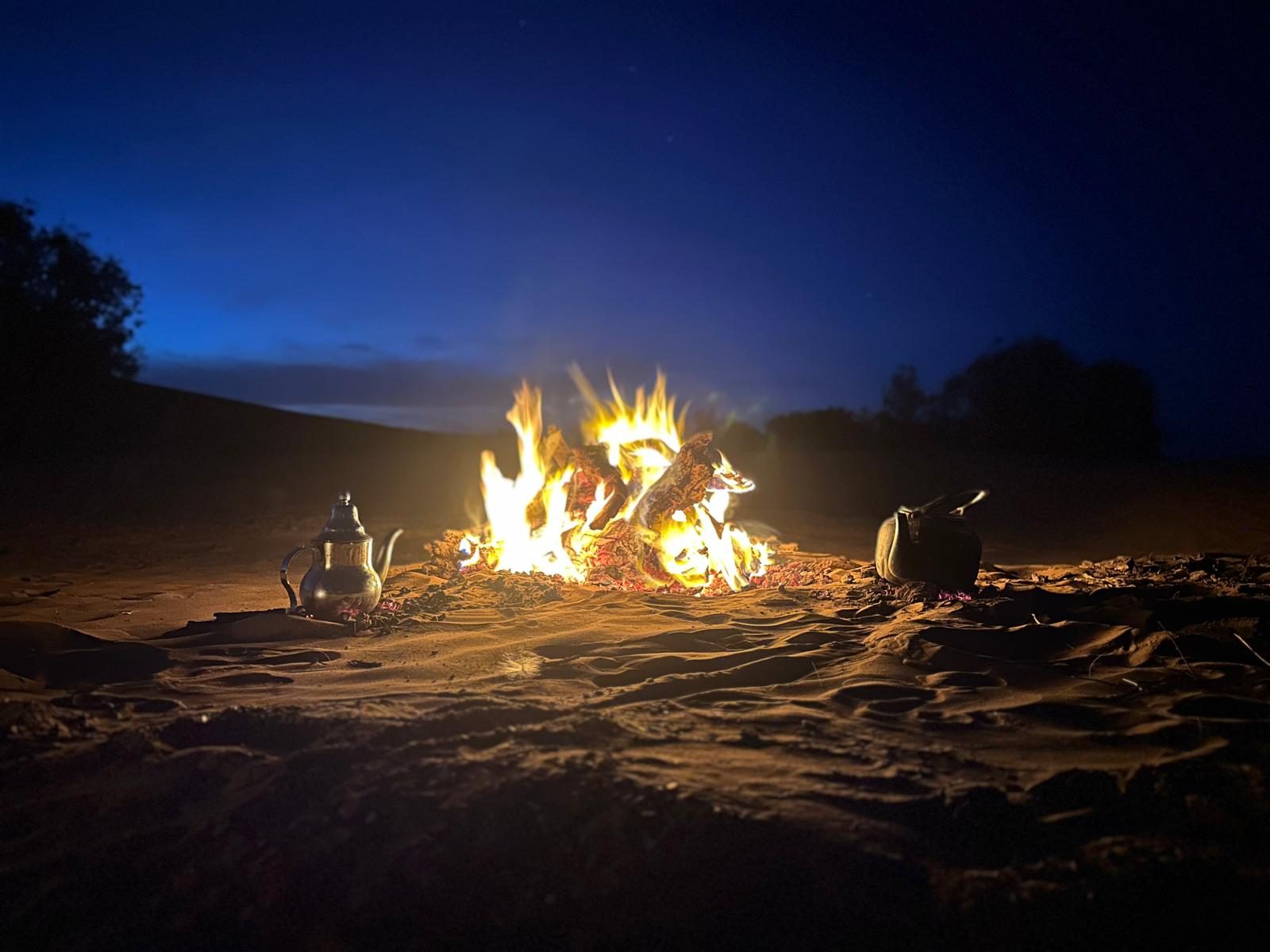
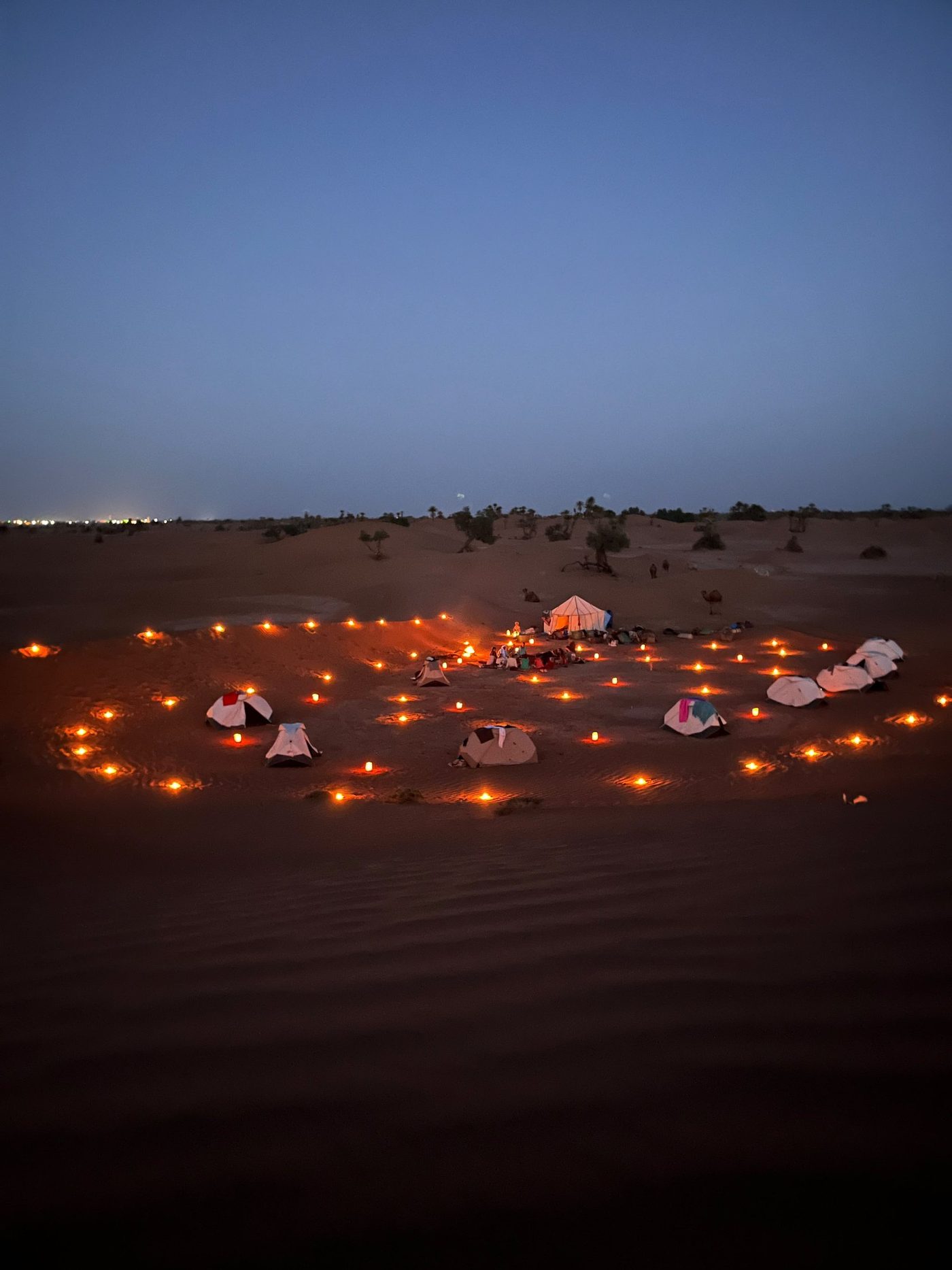
Douaib, after dark
What you learn
Three real things, with your hands
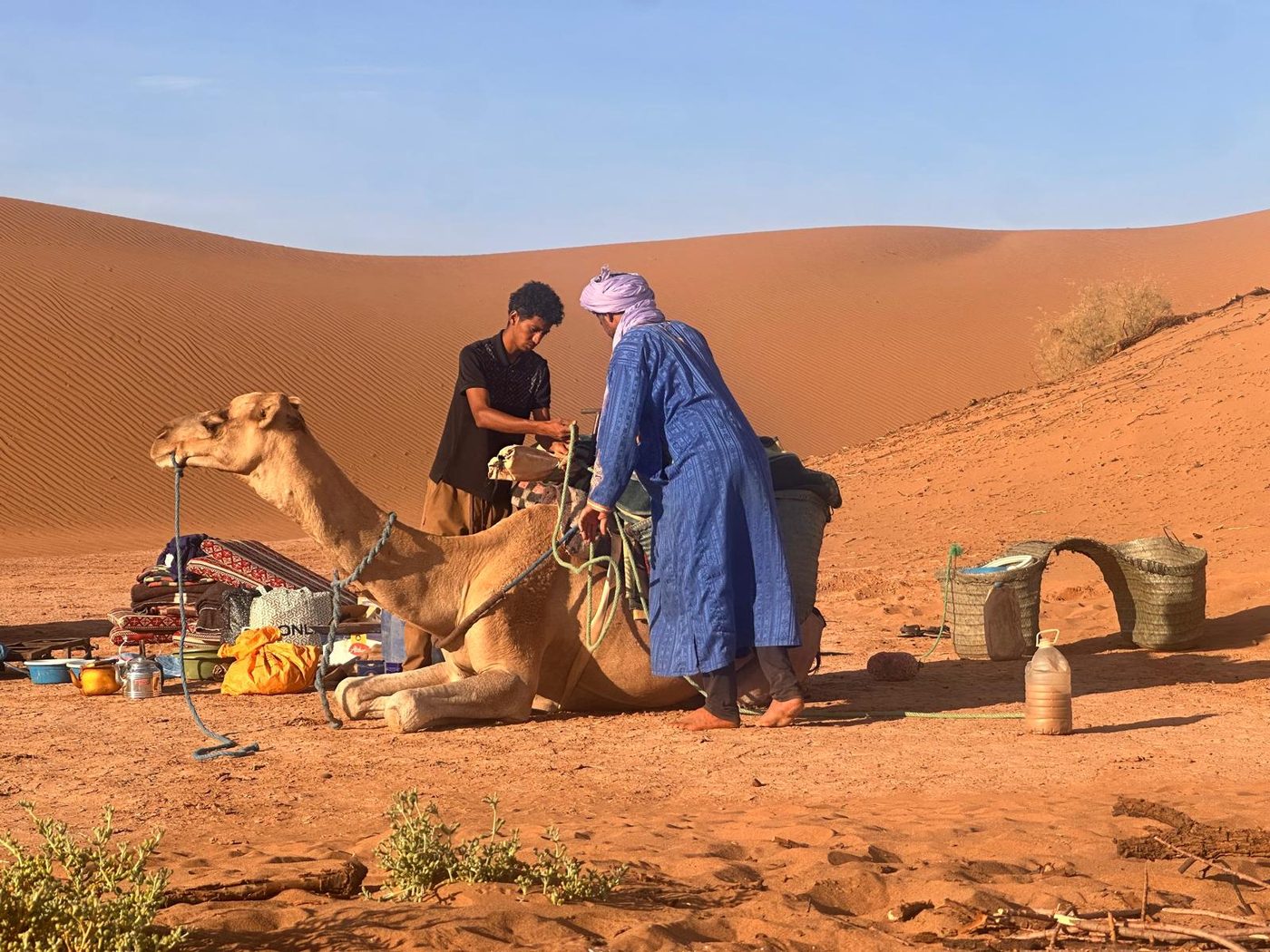
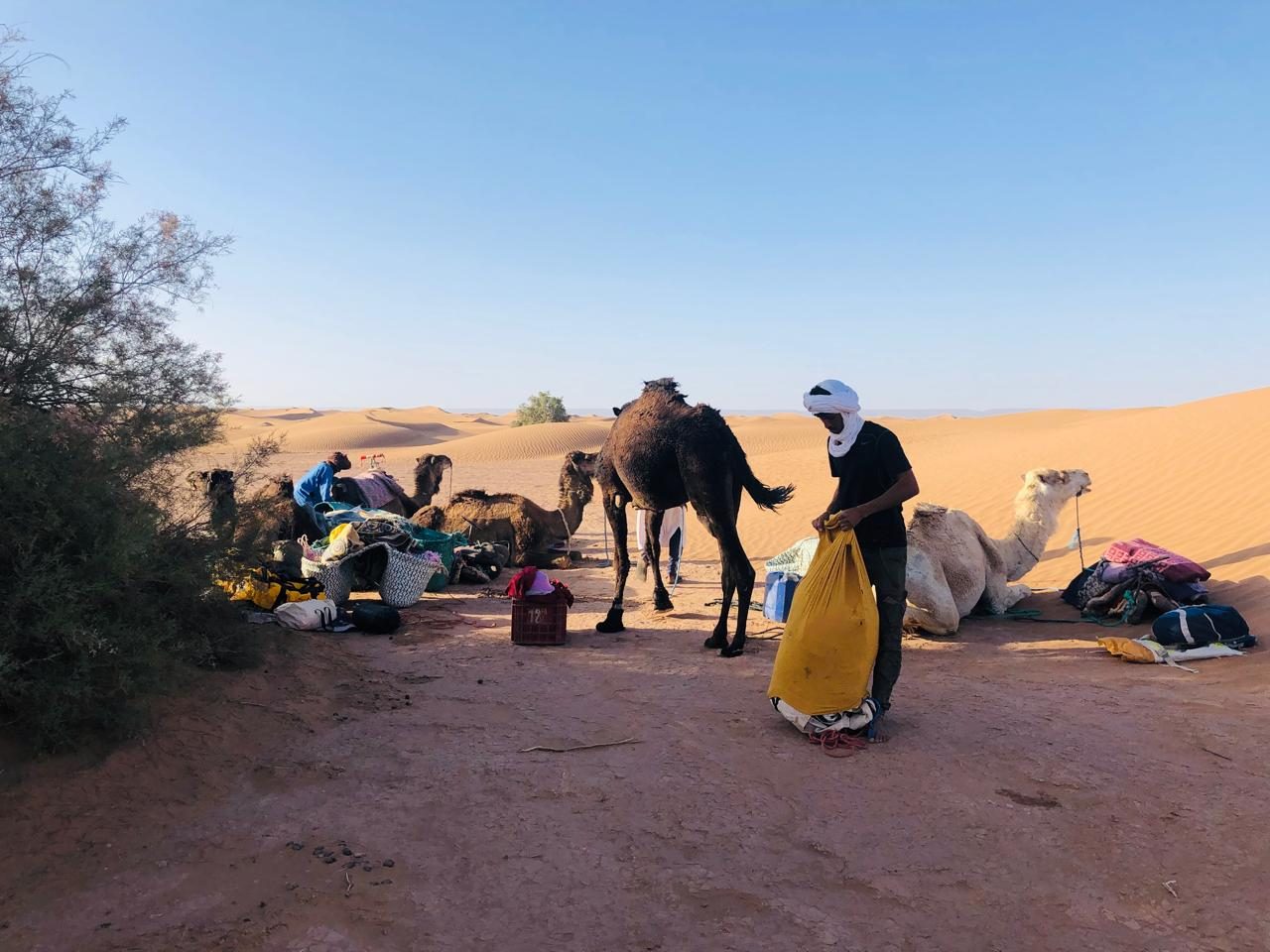
Loading a camelThe balance, the rope, the knot. You do it yourself before we leave.
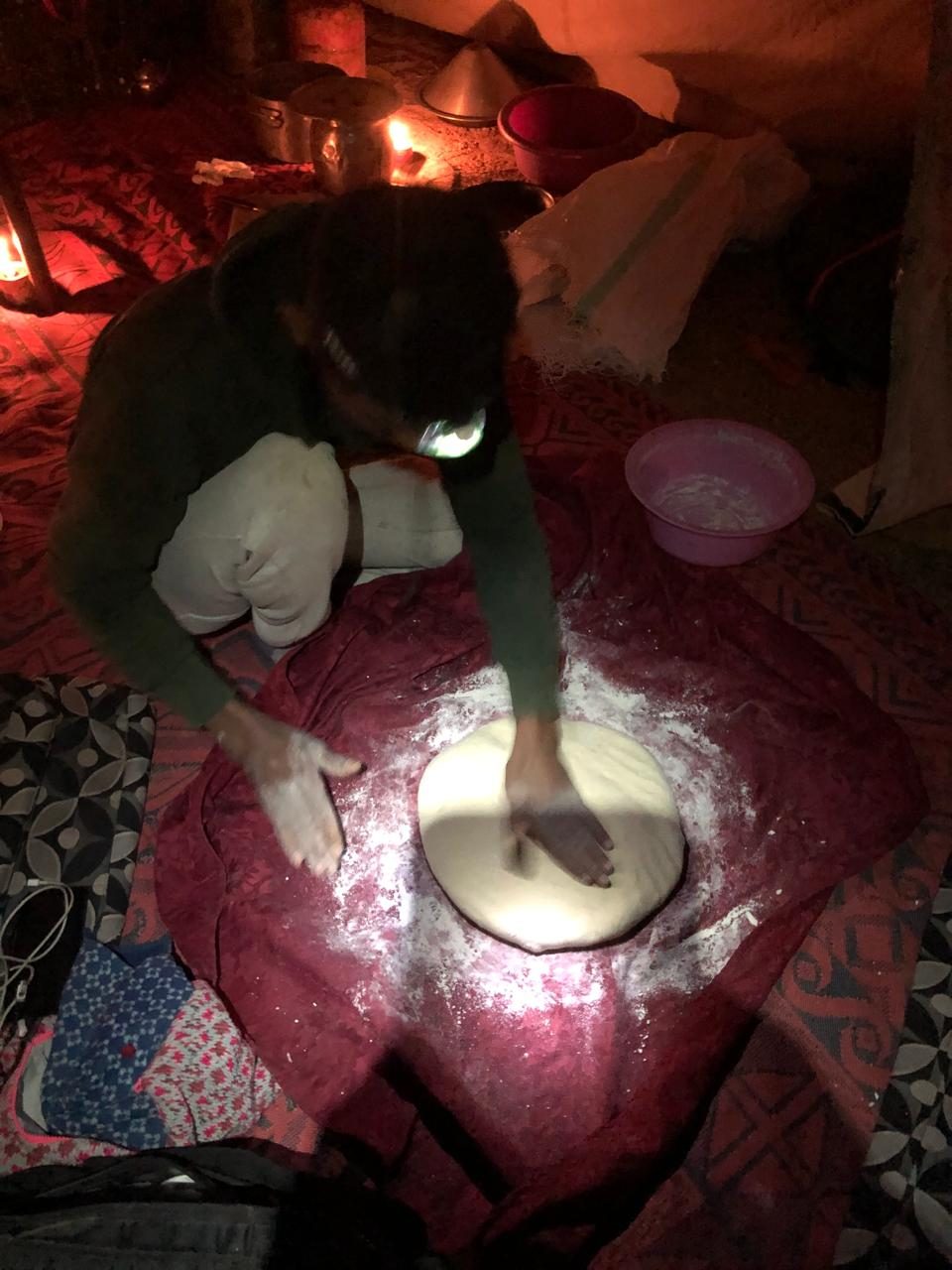
Bread in the sandMix it, bury it under the hot sand and coals, break it open steaming.
The three teasThe fire, the washing, the pouring from high, and what each glass means.
And on the way: the plants of the desert, and the stars the caravans steered by. You go home with a certificate for what you learned. The full seven lessons are in The Desert Apprentice, four days.
The day and the night
How it goes
Day one · morning
M'hamid and the old kasbah
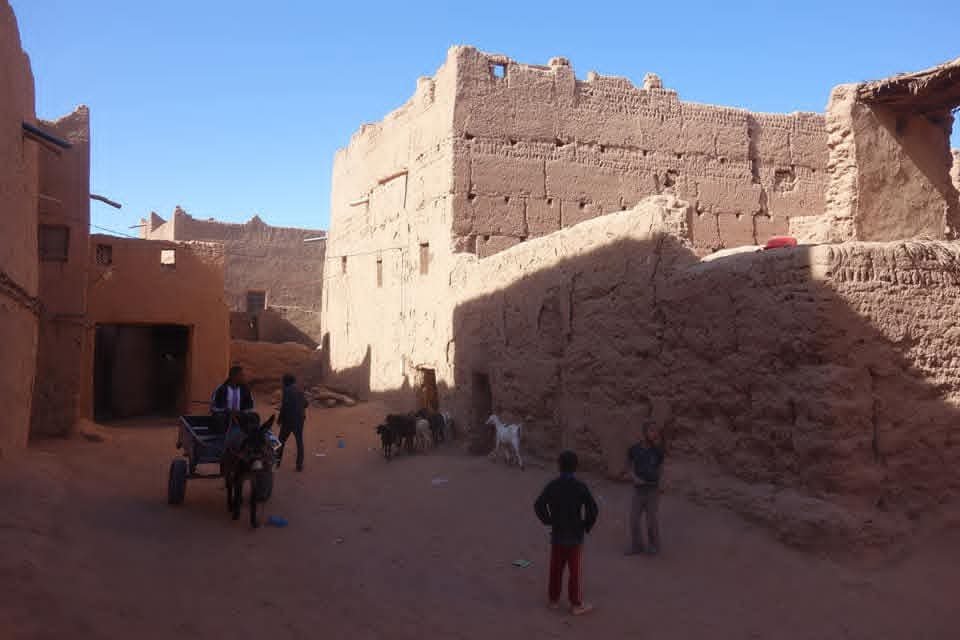
The old kasbah, M'hamid El Ghizlane
We meet at my base and drink tea. I tell you where we are going.
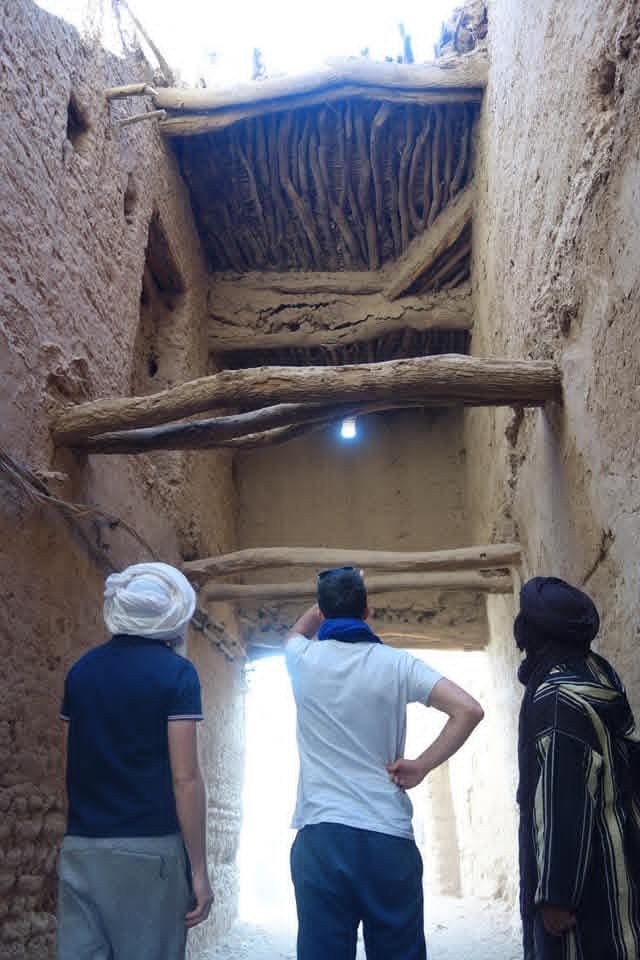
Then the old kasbah. Mud walls, built by hand, still standing. I show you how they were made — earth, straw and palm trunks, nothing else — who lived in them, and why people stopped in this place and not another. M'hamid is the end of the road. After here, the caravans walked.
The roof, palm trunks and earth
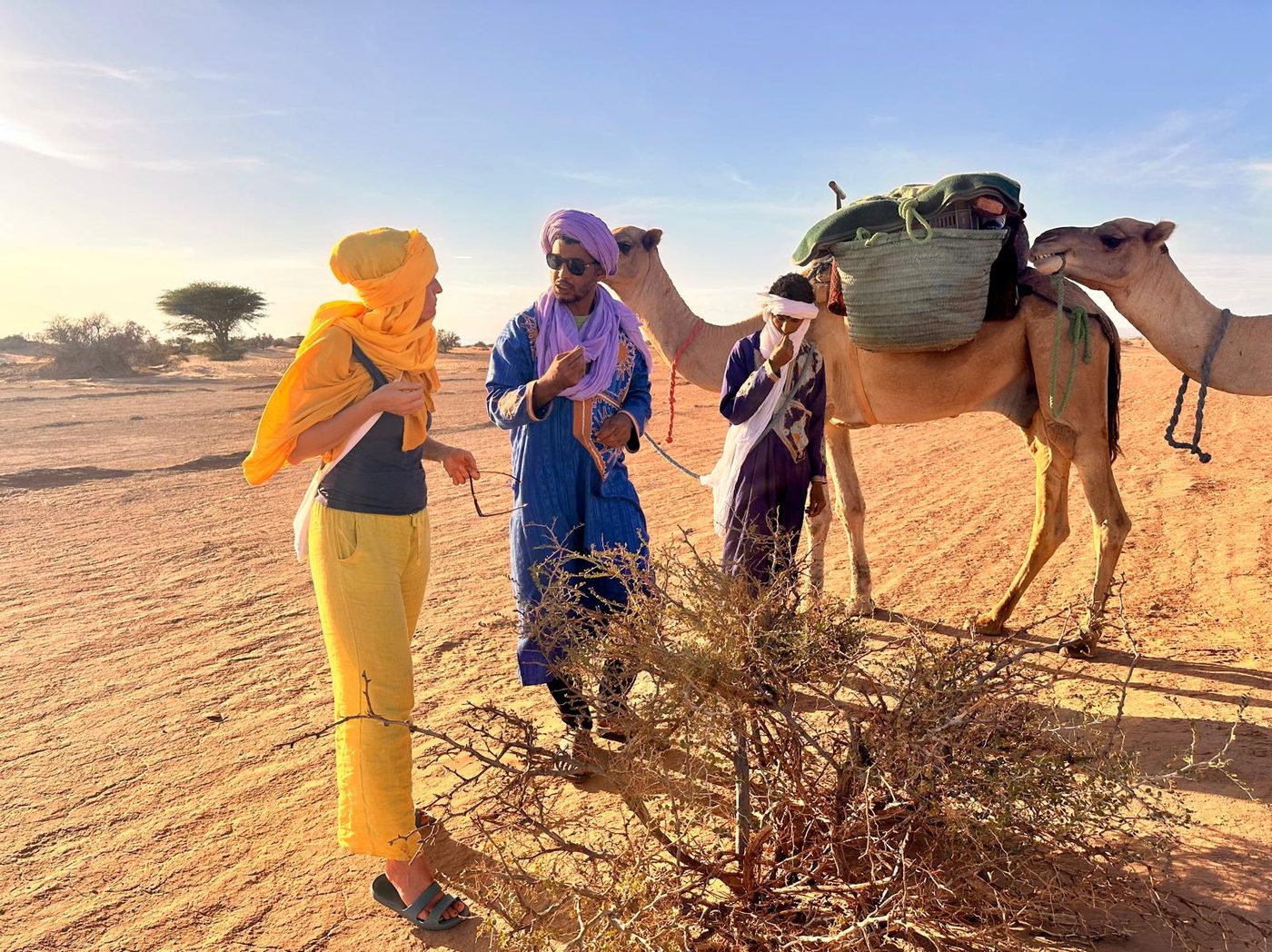
Then we go through the palm grove — the last green, the last houses. On the way I show you the plants: which one is medicine, which one you can eat, which one tells you water is close.
Through the palm grove
Day one · midday
Lunch where the oasis ends
In the shade, at the edge
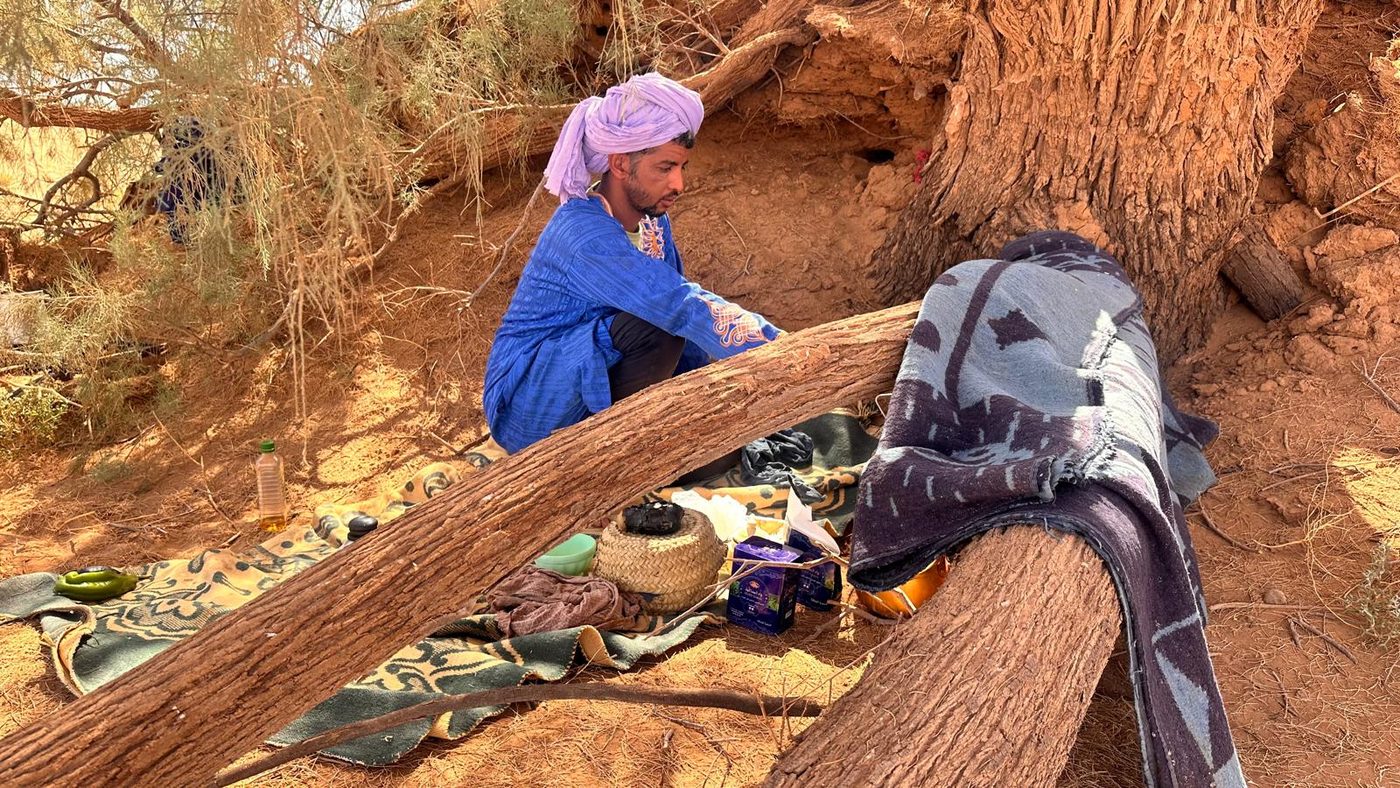
We eat in the shade of a tree at the edge of the oasis. From where you sit you can see both — the green behind you, the sand in front.
Then we rest. In the desert nobody walks in the hot hours. We wait for the sun to come down a little, and we drink tea.
Day one · afternoon
Into the sand, to Douaib
Loading, before we leave
First you learn to load a camel. The balance, the rope, the knot. If the load is not even, the camel knows before you do.
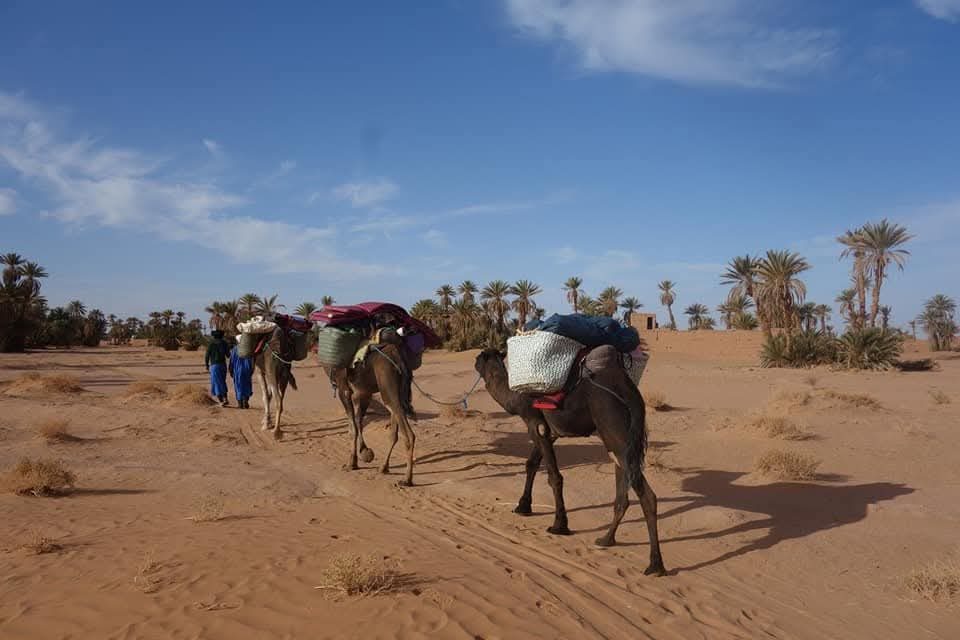
Then we walk into the sand. We reach Douaib before the sun goes down, and we put the camp up together.
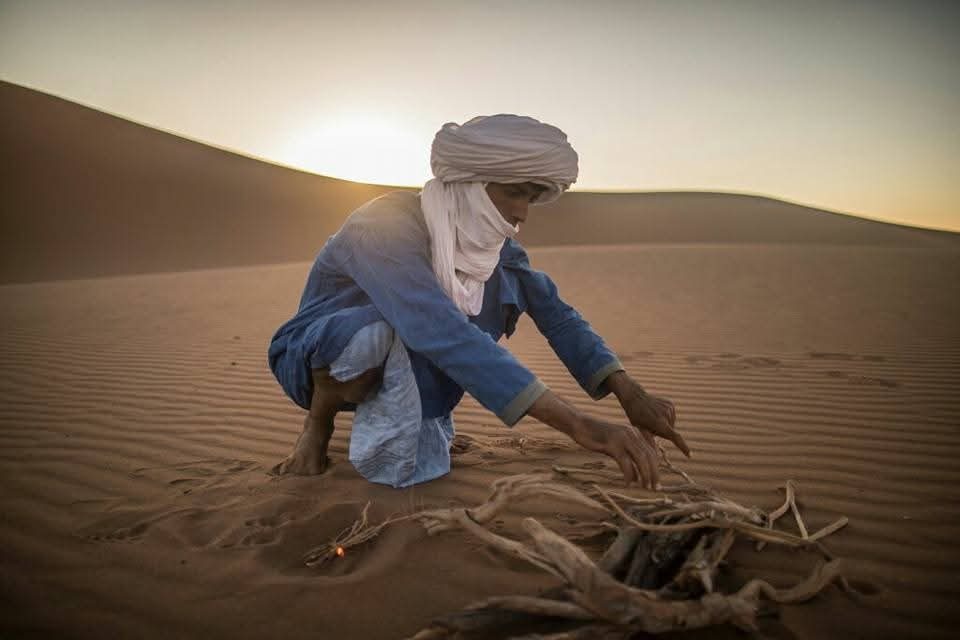
The first fire
First fire, first lesson with your hands: bread in the sand. You mix the dough. We bury it under the hot sand and the coals and we wait. We pull it out steaming and break it with our hands. That is dinner, with tagine on the fire — no gas, no electricity.
Day one · night
The tea and the stars
The dough, before it goes in the sand
After we eat, the tea. Not drinking it — making it. Here tea is not a drink. It is how we welcome a person and how we pass the time, and there are three glasses, each one with its own meaning.
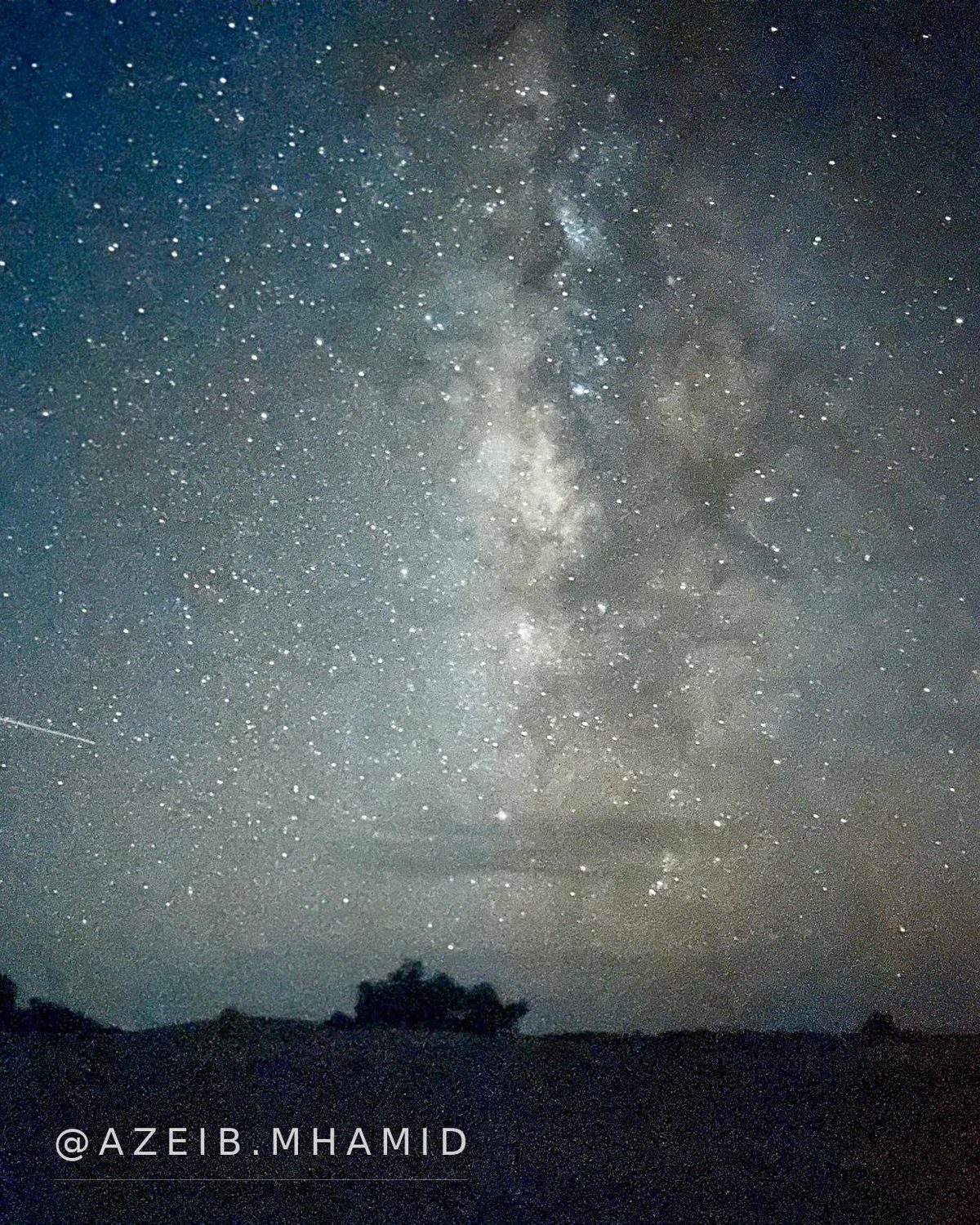
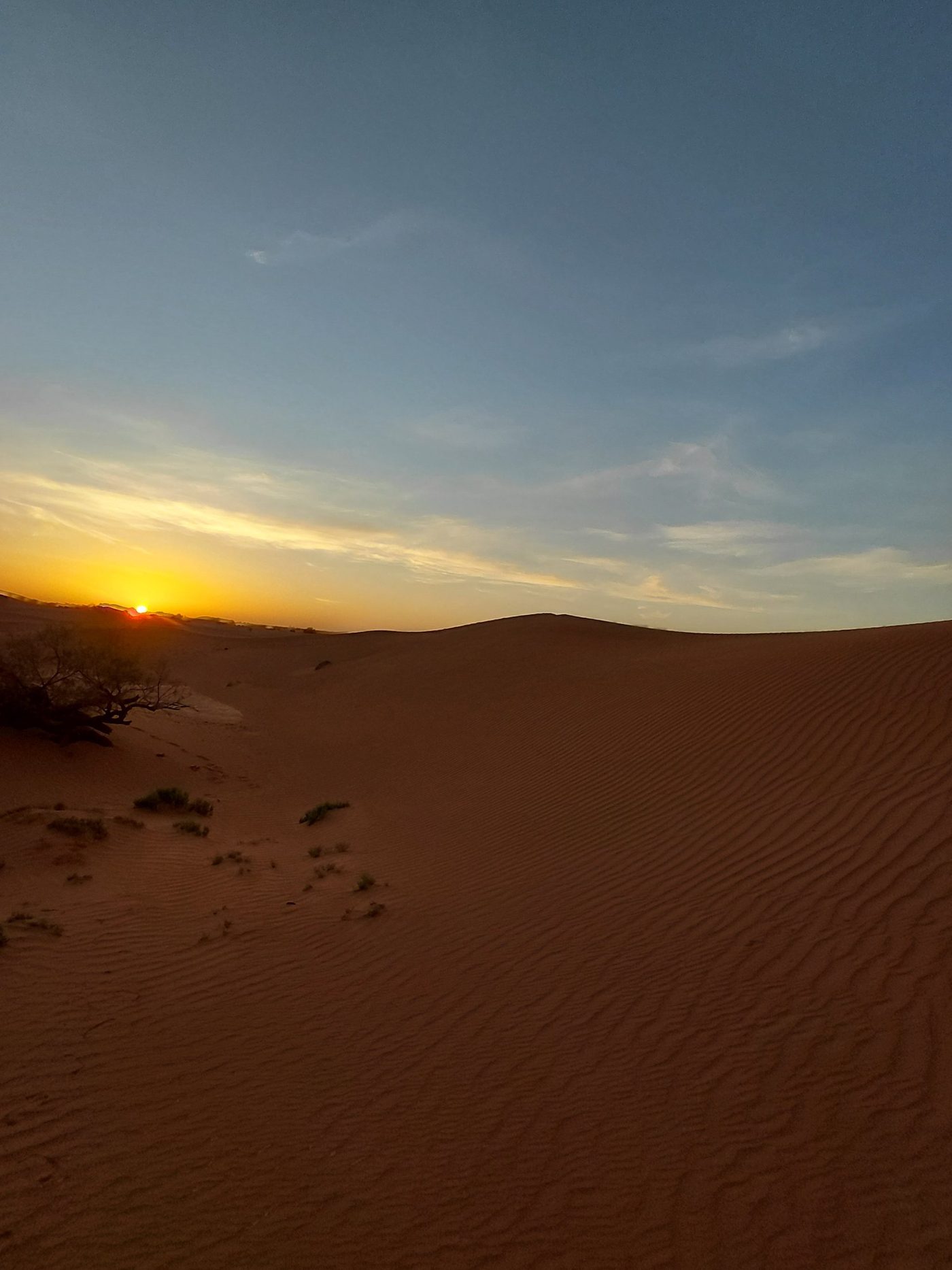
Then the sky. The caravans had no map and no phone. They had these stars, and I show you how to hold your direction with them.
The sky at Douaib
People come for one night and think it is not enough. One night in the real desert is not a small thing.
Day two · morning
Back to M'hamid
Taking the camp down
Breakfast by the fire. Then the last lesson: leave no trace. We take the camp down together and leave the ground the way we found it. The nomads lived here hundreds of years and left it clean. That is why it is still good.
We walk back in the cool of the morning. The green comes back. You enter M'hamid on foot, the same way you left it. Tea at the base, and your certificate.
Then you go — knowing something you did not know yesterday.
How far do we walk?
Not far. A few hours in the afternoon, and a few hours back in the morning. The camels carry everything, so you carry only your water.
If someone is tired, we slow down. Nobody is left behind and nobody is pushed. This is not a race, and the desert does not reward hurrying.
What you get, what you bring
Included
Camels and the camel man
All food and water
Tea, always
Tents, mats, blankets
Every lesson
Your certificate
First aid kit and satellite phone
Bring
Walking shoes you have worn before
A warm jacket — nights are cold, even in summer
A scarf or turban for sun and wind
A hat and sunscreen
A small torch
A bottle you can refill
A warm layer for sleeping
One night out there
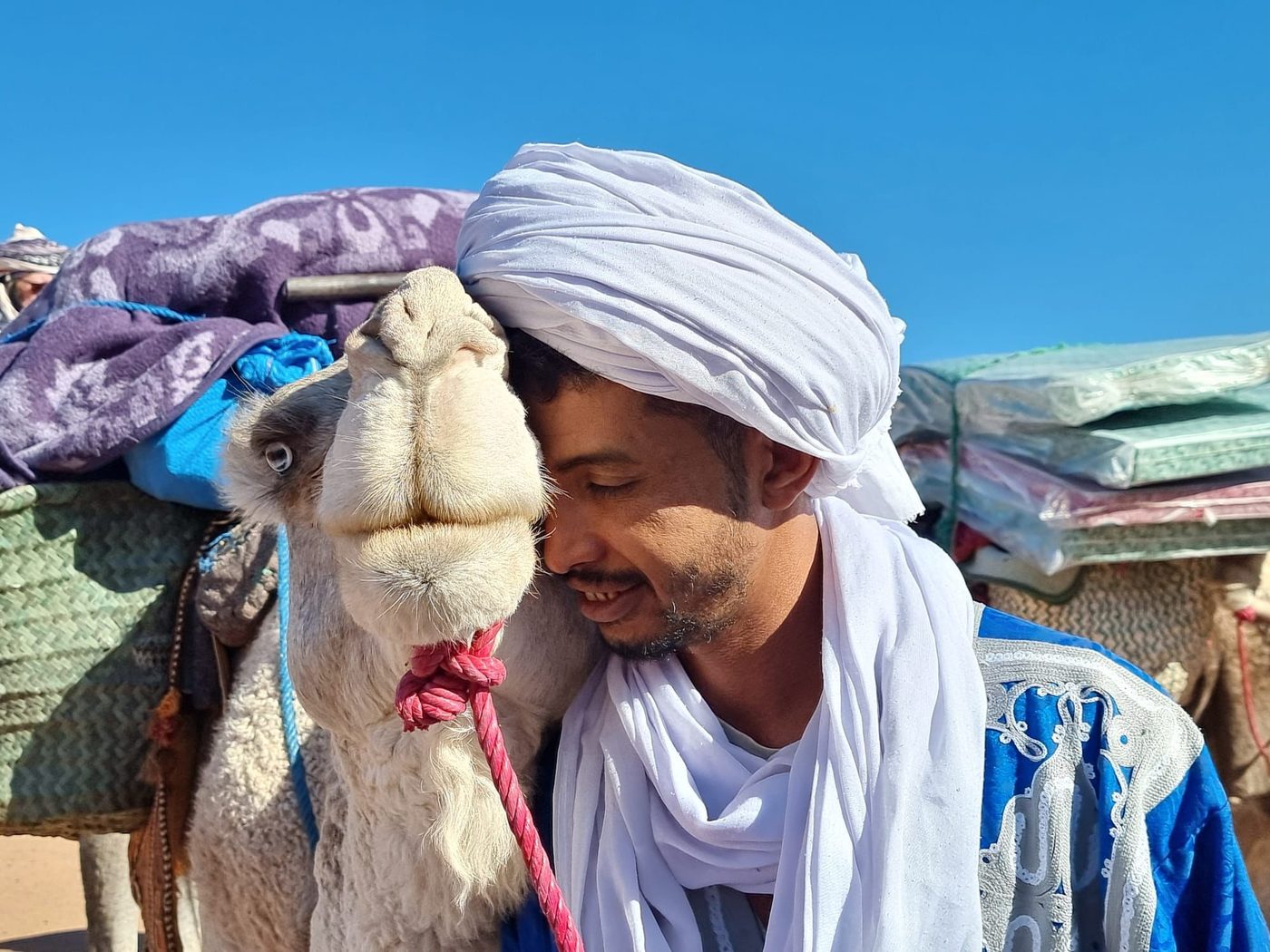
The camp at duskThe plants, on the wayMadou and his camelMorning, before we walk
Come and see
Write to me
Tell me how many people, which dates you are thinking of, and if anyone has a health problem I should know about. I will tell you honestly if the dates work and what it costs.
The good season is October to April. In summer the days are too hot for this walk.
Madou Bouhjar — M'hamid El Ghizlane, Drâa-Tafilalet, Morocco