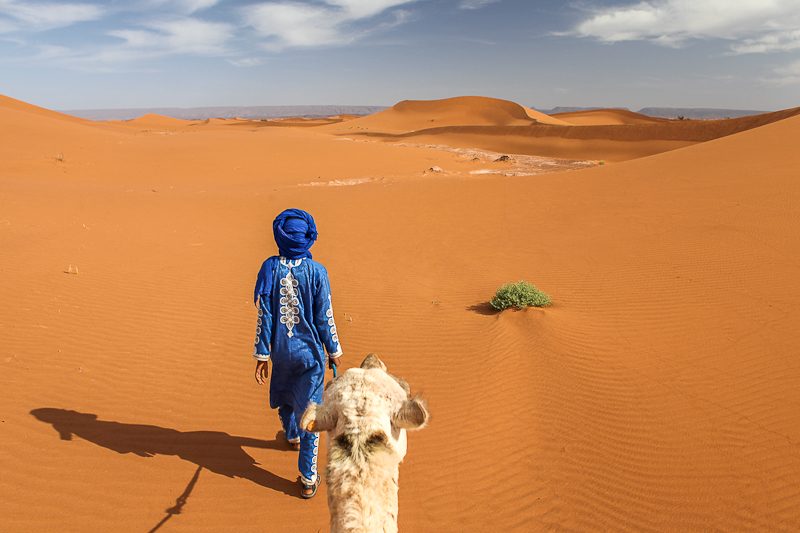
You will not reach Timbuktu. The caravans took fifty-two days. But the first part of that road runs out of M'hamid, and this trip walks it.
Six days, five camps, no car. You sleep where the caravans slept, you learn what the men who walked it had to know, and you come back into the village on foot the same way you left.
Where
M'hamid El Ghizlane
How long
6 days, 5 nights
Group
2 to 15 people
Walking
Medium
Guide & cook
Madou Bouhjar
Season
October to March
The route
Five camps, out and back
M'hamid El GhizlaneThe last oasis. The road ends here.
Sidi NajiThe old ksar on the caravan road to Timbuktu.
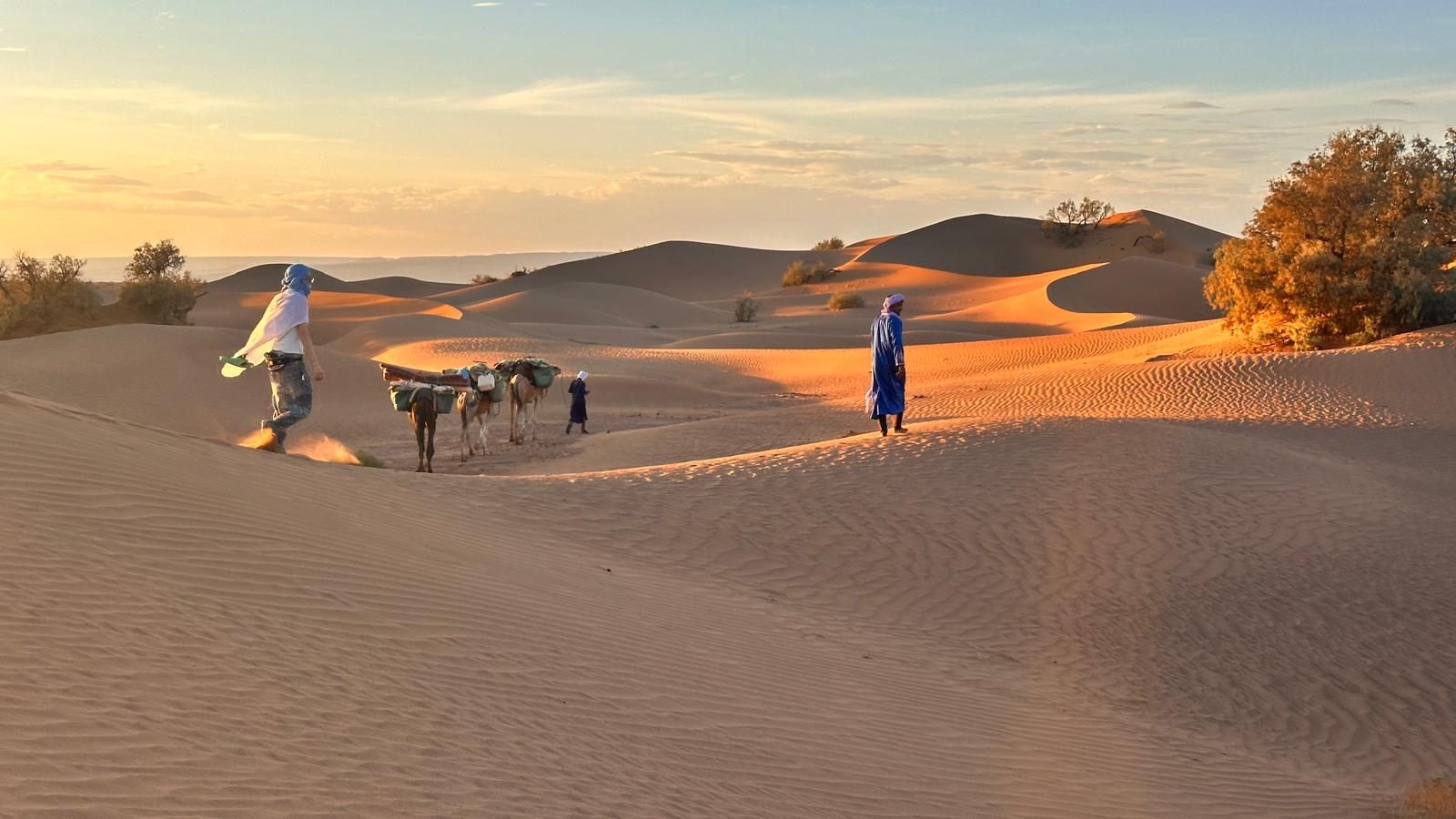
Erg ZaharThe big dune. From the top you see the whole country.
Erg SmarThe old village the Draa left behind.
Erg Ait OunirThe biggest dunes. The night of the stars.
DouaibLast camp, close to home.
M'hamid El GhizlaneBack on foot, the way you left.
Erg Zahar, the view from the top
What you learn
Eight real things, with your hands
Bread in the sandMix it, bury it under the hot sand and coals, break it open steaming.
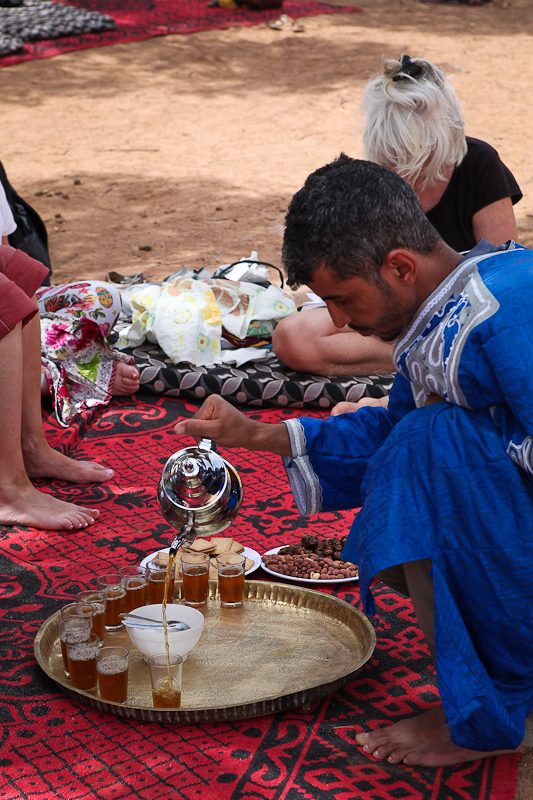
The three teasThe fire, the washing, the pouring from high, and what each glass means.
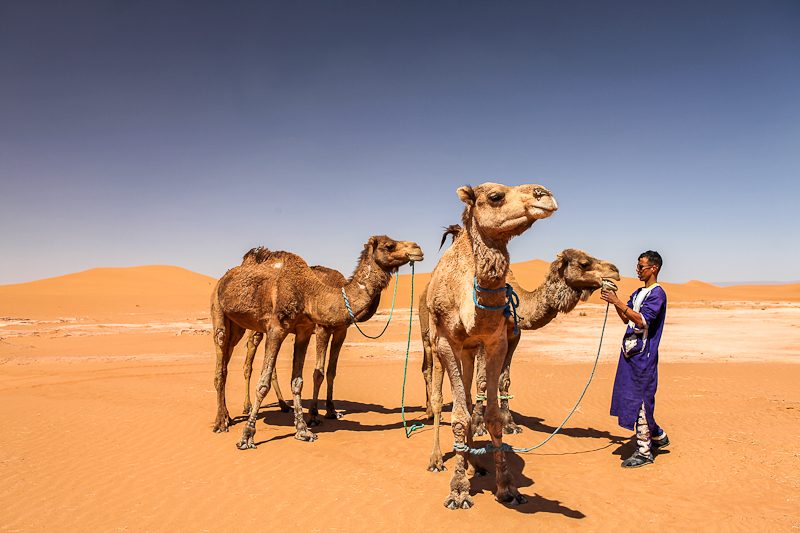
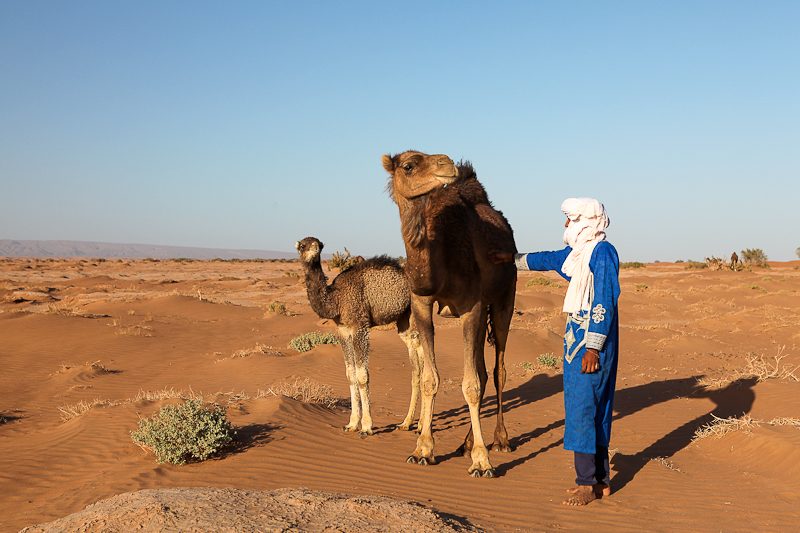
Loading a camelThe balance, the rope, why we call them the ships of the desert.
Desert plantsWhich is medicine, which you can eat, which one says water is near.
Reading the landFrom the top of Erg Zahar, how the whole country fits together.
Finding your wayThe sun, the dunes, the wind, and the stars the caravans used.
Water and heatWhere water hides, how to make shade from nothing, what to do if you are lost.
Reading the groundFox, beetle, snake, camel. The sand tells you who passed and when.
The six days
How it goes
Day one
M'hamid to Sidi Naji
Sidi Naji, the old caravan ground
Tea at my base and I tell you where we are going.
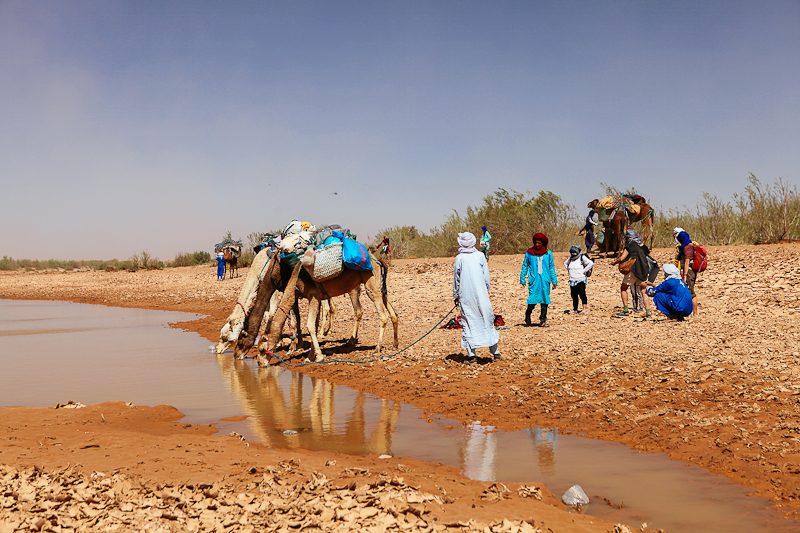
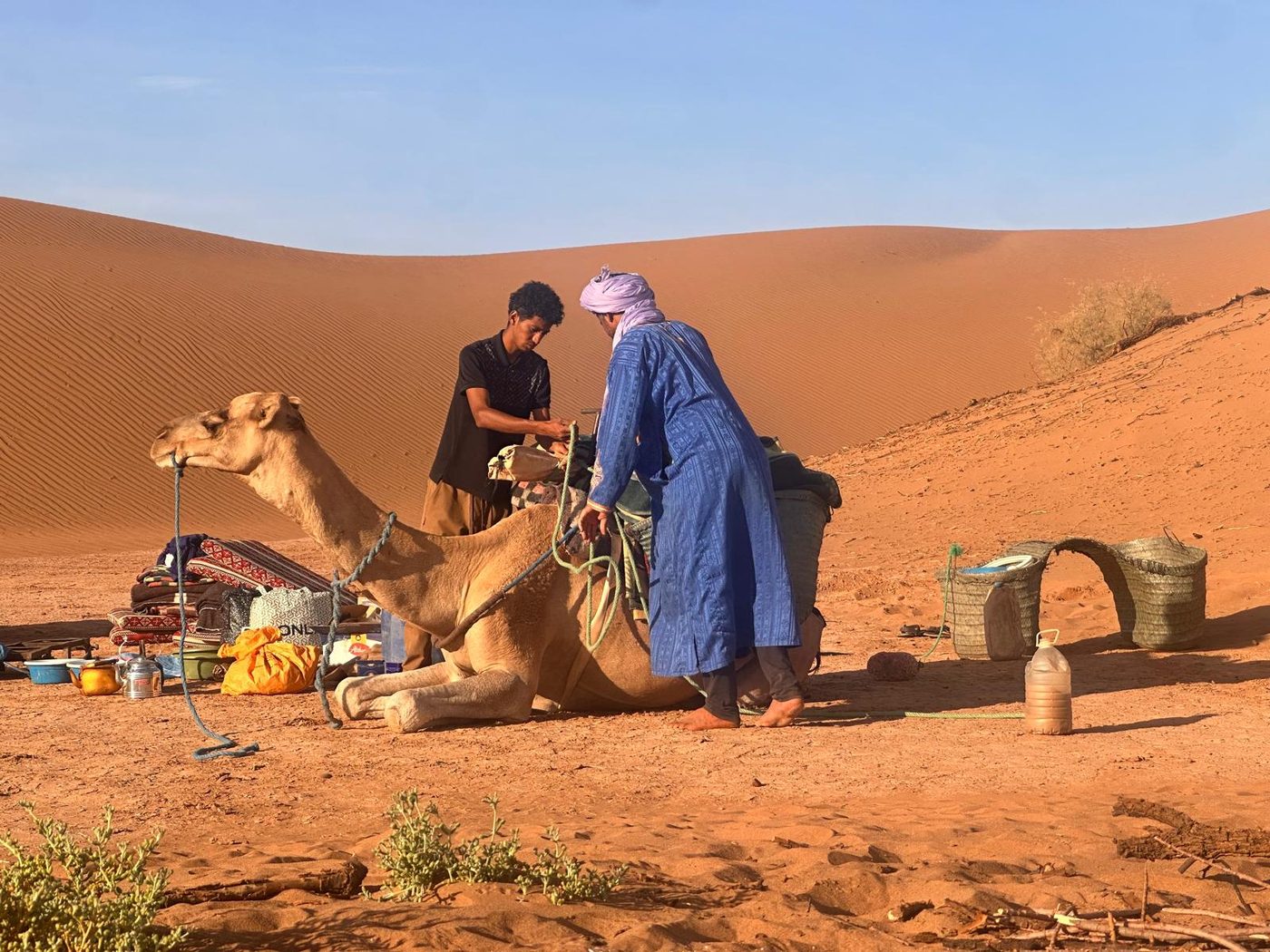
Then the camels. You learn to load one yourself before we leave — the balance, the rope, the knot. It is the oldest work in this place, and in a few hours you will see why.
We walk out through the palmeraie. The last green, the last houses, the end of the road. Then the sand. We camp at Sidi Naji, and there is an old ksar standing there.
This is not empty ground. The big caravans passed here on the way to Timbuktu. M'hamid was the last place with water before the long crossing. The men who walked out of here were doing with their camels what you did with your hands this morning.
First fire, first lesson: bread in the sand. You mix the dough. We bury it under the hot sand and the coals and we wait. We pull it out steaming and break it with our hands. The same bread, in the same ground, as the men going south.
Day two
Sidi Naji to Erg Zahar
The tea, poured from high
We walk early, while the air is cool. On the way I show you the plants — which one is medicine, which one you can eat, which one tells you water is near. The desert is a pharmacy if you know where to look.
We camp under Erg Zahar, the big dune of this area.
Before sunset we climb it. From the top you see all of it — every dune, the whole country around you, the way we came and the way we are going. On the ground the desert is a wall you walk into. From up there it has a shape.
That is the lesson, and this is the right place for it. I show you where M'hamid is behind us, where we go tomorrow, which way the wind has been working the dunes, why water would sit in one place and not another. You will not have this view again for four days, so you look properly now and you carry it in your head.
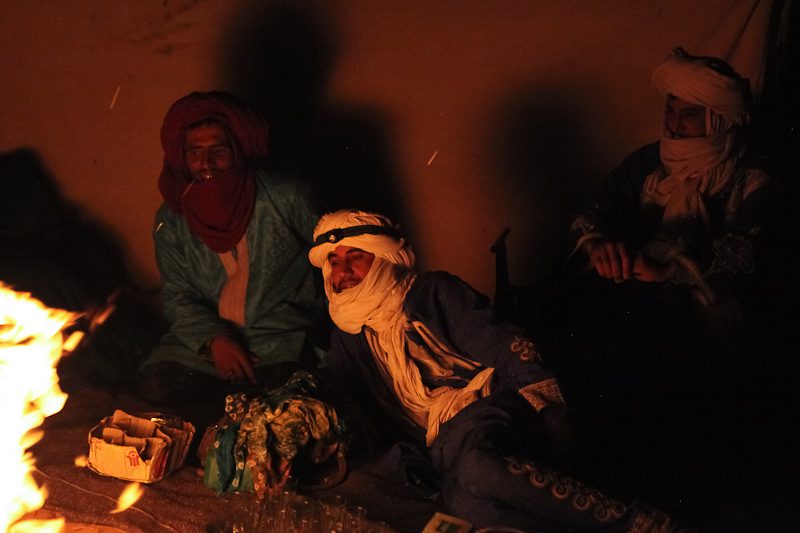
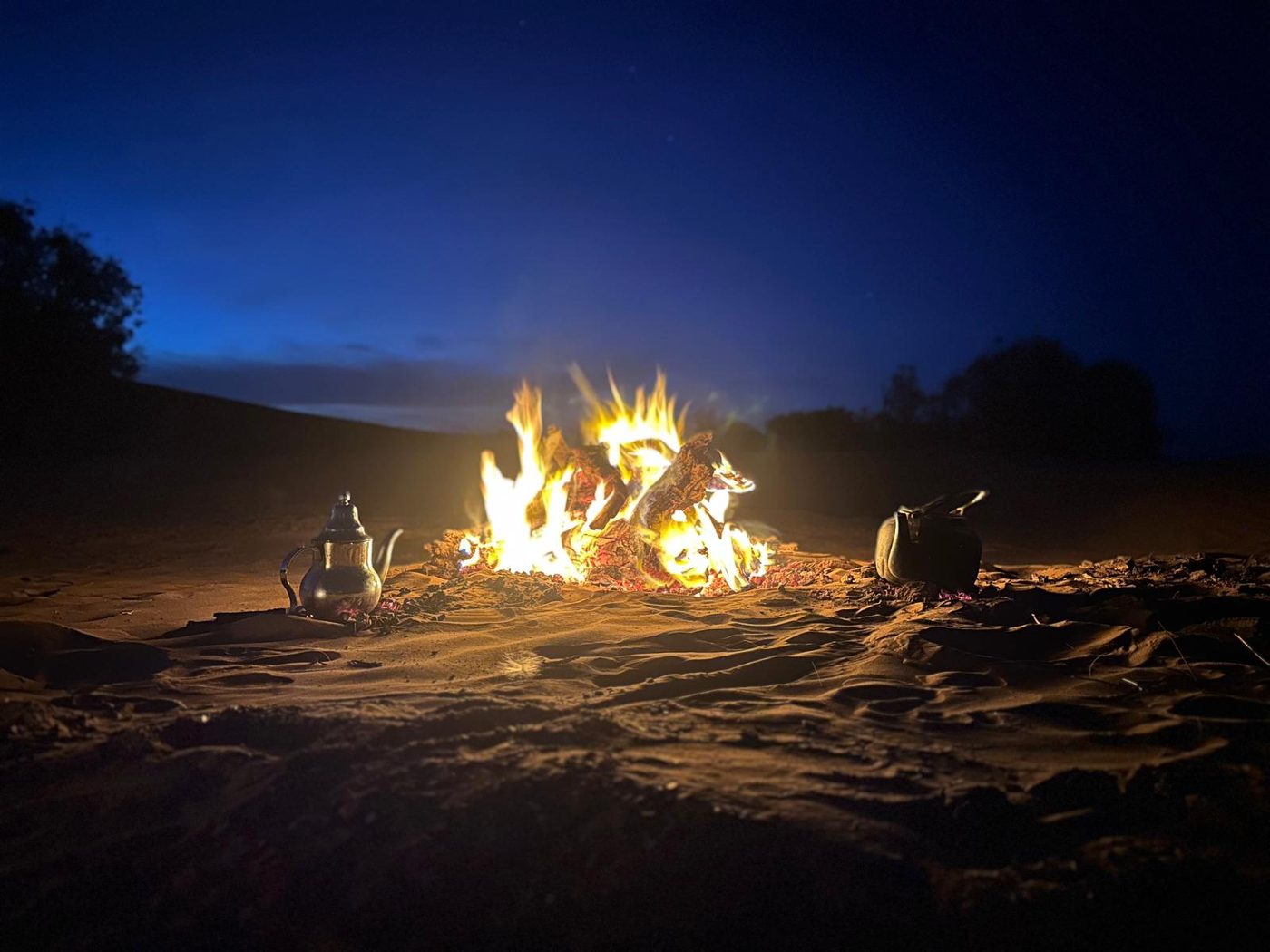
Then down for the fire, and the tea. Not drinking it, making it. Here tea is not a drink. It is how we welcome a person.
Day three
Erg Zahar to Erg Smar
The Draa, where the gardens were
Finding your way. The sun in the morning and the sun at midday. The shape of the dunes and the direction of the wind. How to walk straight when there is nothing in front of you to walk toward. Yesterday you saw the country from above. Today you cross it from inside, and you find out how much you remembered.
We reach Erg Smar. There was a village here. People lived in it, and they had gardens and fields along the Draa valley.
They are not here now. The water changed, and the people went where the water went. What is left is the shape of the place and the ground they worked.
Day one, a road that is gone. Day three, a village that is gone. The desert does not stay the same. It only looks like it does.
Evening: we cook together. Tagine on the fire, no gas and no electricity. You learn the spices and how to hold the heat with the wood.
Day four
Erg Smar to Erg Ait Ounir
Into the big sand
Water and heat. Where water hides. How to make shade out of almost nothing. Why we rest in the hot hours and walk in the cool ones. And what to do if you are alone and lost: stop, make shade, stay where you are.
Erg Ait Ounir is the big sand — the biggest dunes of the whole trip.
So this is the night for the stars. The caravans going to Timbuktu had no map and no phone. They had this sky, and they crossed a thousand kilometres with it. I show you the stars they used and how to hold your direction with them.
If the night is good, we sleep outside the tent.
Day five
Erg Ait Ounir to Douaib
Last camp, Douaib
The way home begins.
Reading the ground. Fox, beetle, snake, camel — the sand tells you who passed and when. By now you see things you walked straight past on the first day without noticing. That is the real change, and it happens quietly.
We camp at Douaib, close enough to the village that the last morning is short and easy.
This is the long evening. Nobody is tired any more, nobody is nervous, and the fire goes late.
Day six
Douaib back to M'hamid
The walk home
Breakfast, then the last lesson: leave no trace. We take the camp down together and leave the ground the way we found it. The nomads lived here hundreds of years and left it clean. That is why it is still good.
We walk back in the cool of the morning. The green comes back. You enter M'hamid on foot, the same way you left it.
Lunch in the village, and your certificate.
Six days ago you could not load a camel or make bread in sand. Now you can.
How far do we walk?
It depends on you.
Some groups walk four hours a day, some walk six. We start early, we rest in the hot hours, and we reach camp before the sun goes down. The camels carry everything, so you carry only your water.
If someone is tired, we slow down. Nobody is left behind and nobody is pushed. This is not a race, and the desert does not reward hurrying.
Six days is longer than four, but it is not harder. There is more time, so we go slower.
What you get, what you bring
Included
Camels and the camel man
All food and water
Tea, always
Tents, mats, blankets
Every lesson
Your certificate
First aid kit and satellite phone
Bring
Walking shoes you have worn before
A warm jacket — nights are cold, even in summer
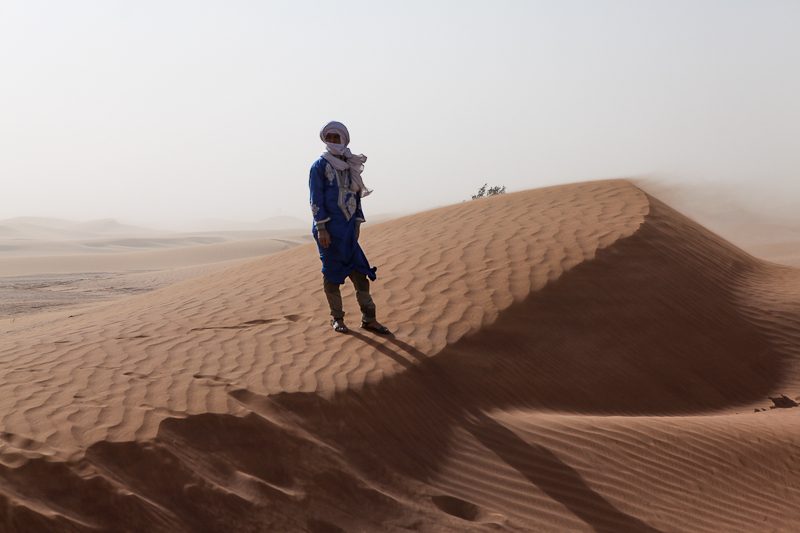
A scarf or turban for sun and wind
A hat and sunscreen
A small torch
A bottle you can refill
A warm layer for sleeping
Out there
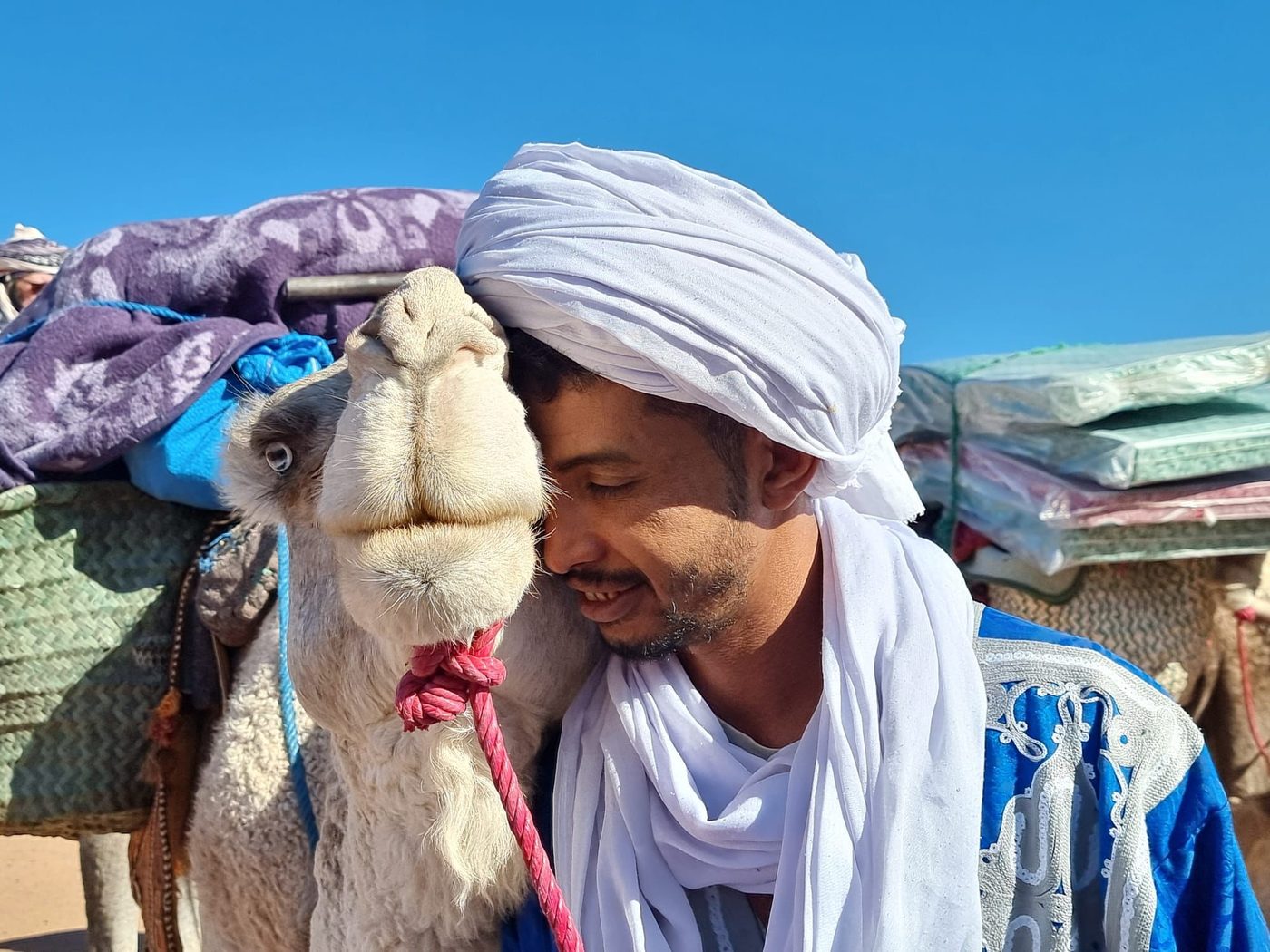
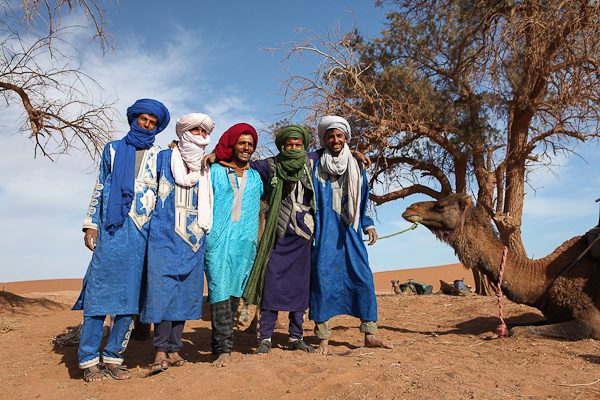
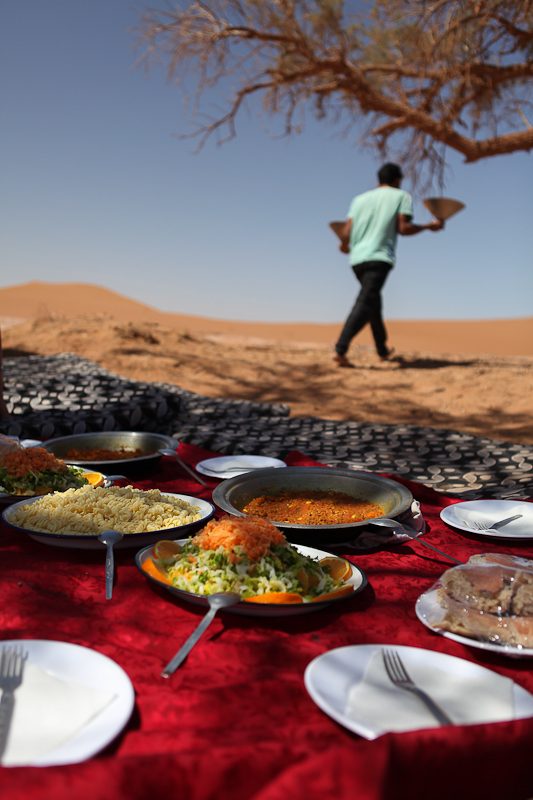
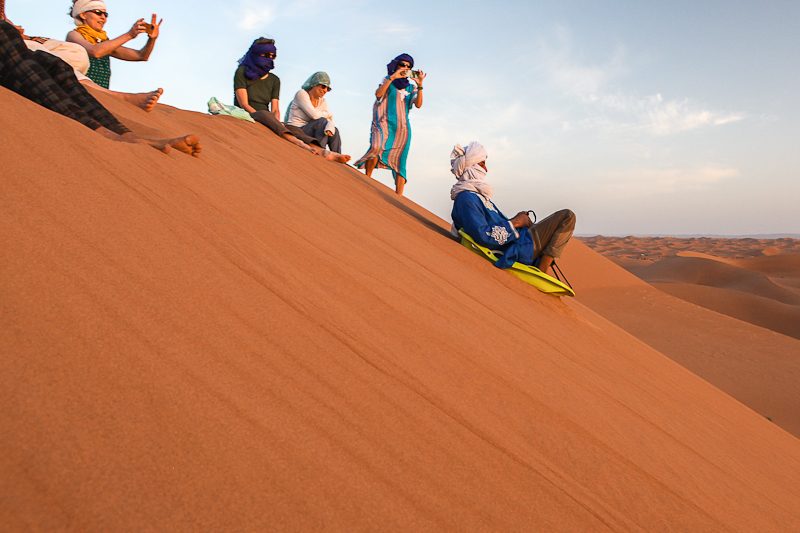
Your guideLoading, before we leaveThe fire at blue hourThe teamLunch under the treeThe dune, late afternoon
Come and see
Write to me
Tell me how many people, which dates you are thinking of, and if anyone has a health problem I should know about. I will tell you honestly if the dates work and what it costs.
The good season is October to March. In summer the days are too hot for this walk.
Madou Bouhjar — M'hamid El Ghizlane, Drâa-Tafilalet, Morocco